
Angry Balls Strategies: Mathematical Analysis & Risk Management 2026
⚠️ Critical: No Strategy Beats the House Edge
The mathematical house edge of 3.49-3.52% means that over time, the casino will always profit. This is built into the game's RTP (96.48-96.51%).
The strategies below are about managing variance and extending playtime, not guaranteeing wins. Skill can help you collect more coins and reduce losses, but it cannot eliminate the house advantage.
Realistic expectations: Over 1,000 rounds at $10 per round ($10,000 total), you'd expect to lose approximately $350-520 due to the house edge alone. Individual sessions vary significantly due to variance—you might win $500 in one session and lose $400 in another.
Never gamble money you can't afford to lose. Set strict limits before playing and stick to them.
Understanding the Math
Before discussing strategies, it's crucial to understand the mathematical foundations of Angry Balls. This knowledge helps set realistic expectations and prevents costly mistakes.
RTP Explained (With Real Examples)
RTP (Return to Player) of 96.48-96.51% means:
- For every $100 wagered over the long term, you can expect approximately $96.48-$96.51 back
- The casino keeps $3.49-$3.52 per $100 wagered (the house edge)
- Over 1,000 rounds at $10 per round ($10,000 total), you'd expect to lose approximately $350-520
- Over 10,000 rounds at $1 per round ($10,000 total), you'd expect to lose approximately $350-520
Example Calculation:
Starting bankroll: $1,000
Play amount: $10 per round
Rounds played: 100 rounds ($1,000 total wagered)
Expected return: $1,000 × 96.5% = $965
Expected loss: $1,000 - $965 = $35
Note: Actual results vary significantly due to variance. You might win $200 or lose $150 in 100 rounds.
House Edge Calculation
The house edge is calculated as: 100% - RTP
- RTP: 96.48-96.51%
- House Edge: 100% - 96.5% = 3.49-3.52%
This means the casino has a mathematical advantage of 3.5% over the long term. No strategy can overcome this—it's built into the game's design. For a complete understanding of game mechanics, see our Angry Balls how-to-play guide.
Why it matters: Even with perfect skill (hitting every coin), you'd still lose 3.5% over the long term. Skill can reduce losses and extend playtime, but cannot eliminate the edge.
Variance vs Expected Value
High volatility means:
- Wins can be large (67.50X+ observed) but infrequent
- You might have long losing streaks followed by big wins
- Short-term results don't reflect long-term RTP
- You need sufficient bankroll to weather variance
Variance Example:
Session 1: Win $500 (50X multiplier on $10 bet)
Session 2: Lose $300 (missed coins in 30 rounds)
Session 3: Win $200 (20X multiplier on $10 bet)
Net result: +$400 over 3 sessions
But: Over 1,000 rounds, you'd still expect to lose $350-520 due to house edge
Why "Hot Streaks" Don't Exist (Gambler's Fallacy)
Each round is independent. Past results don't affect future outcomes:
- If you've lost 10 rounds in a row, you're not "due" for a win
- The probability of hitting coins remains the same regardless of previous rounds
- Skill affects your aim and timing, but doesn't change the underlying RTP
- There's no pattern to exploit—coin placement is random
Example: If you hit a 50X multiplier in one round, the probability of hitting another 50X in the next round is the same as it was before—not higher or lower.
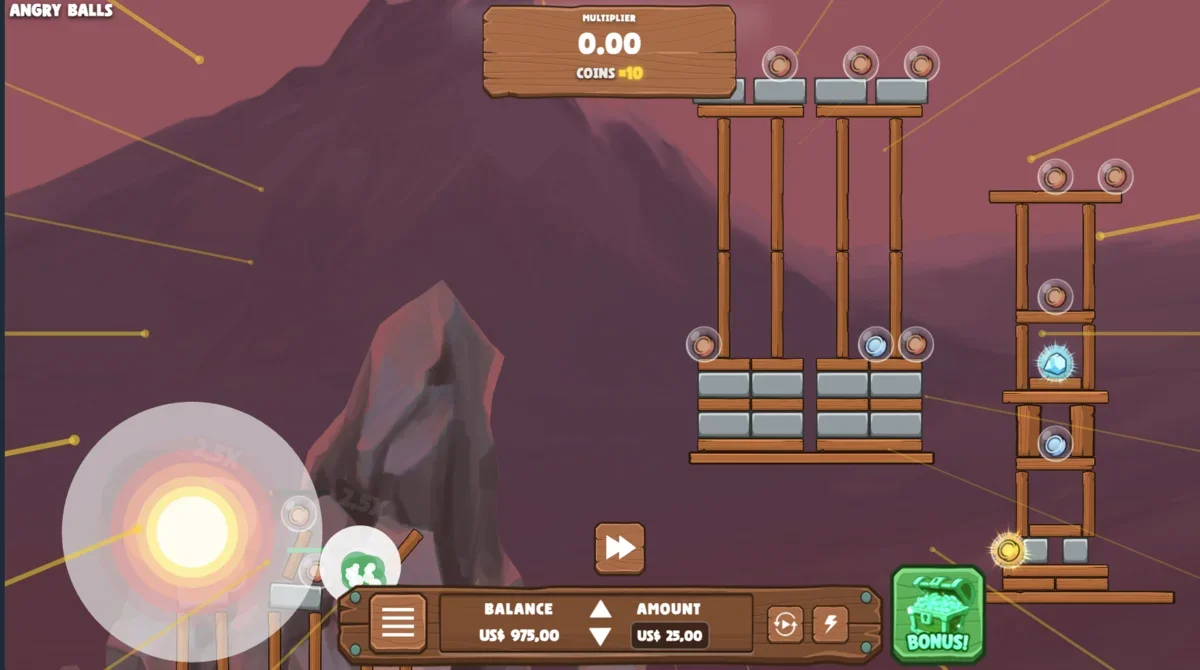
Strategy 1: Conservative Approach (Low Variance)
Core Principle
Play STANDARD MODE (1X cost) with lower launch angles (1-3) for better RTP (96.48-96.51%). Focus on collecting SILVER coins (+1X) consistently rather than chasing GOLD (+5X) or DIAMONDS (+10X). This approach prioritizes steady multiplier building over high-risk launches.
Bet Sizing Strategy
The 1-2% Rule: Never bet more than 1-2% of your total bankroll per round.
| Bankroll | Max Play Amount (1%) | Max Play Amount (2%) | Recommended |
|---|---|---|---|
| $100 | $1.00 | $2.00 | $1.00 (minimum) |
| $500 | $5.00 | $10.00 | $5.00 |
| $1,000 | $10.00 | $20.00 | $10.00 |
| $2,000 | $20.00 | $40.00 | $20.00 |
Angle Selection
Use Angle 1 or Angle 2 in STANDARD MODE for optimal results:
- Angle 1: 96.51% RTP, 6,500X max win - Best overall choice
- Angle 2: 96.51% RTP, 4,500X max win - Excellent alternative
- Angle 3: 96.50% RTP, 3,525X max win - Good balanced option
- Angles 4-6: 96.48-96.49% RTP, 3,225X-3,725X max win - Higher variance
Recommendation: Angle 1 is the clear winner—it offers both the best RTP (96.51%) and the highest maximum win potential (6,500X). This makes it superior to all other angles for both conservative and aggressive play styles.
Coin Collection Strategy
- Prioritize SILVER coins (+1X): Most common valuable coin, provides steady multiplier building
- Don't ignore BRONZE (+0.25X): They add up when collected in bulk
- Take GOLD (+5X) when available: But don't risk missing SILVER coins to chase GOLD
- DIAMONDS (+10X) are bonus: Great if you hit them, but don't rely on them
Session Management
Loss Limits
Set a loss limit before playing (e.g., 20% of bankroll). If you lose $20 from a $100 bankroll, stop immediately. Never chase losses.
Time Limits
Set a time limit (e.g., 2 hours). Stop when the time is up, regardless of results. This prevents extended losing sessions.
Take-Profit Points
Set a profit target (e.g., 30% of bankroll). If you're up $30 from a $100 bankroll, consider stopping or reducing your play amount.
Expected Results
With $100 bankroll at $1 per round:
- Expected playtime: 2-3 hours (100 rounds at ~1-2 minutes per round)
- Typical multipliers: 2-10X in successful rounds
- Expected loss over 100 rounds: $3.50 (due to house edge)
- Actual results vary: You might win $20 or lose $15 due to variance
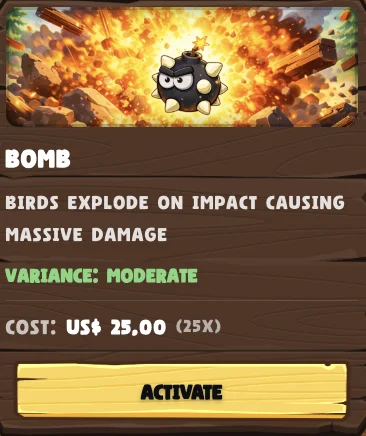
Strategy 2: Aggressive Approach (High Variance)
Core Principle
Use BOMB MODE (25X cost) or MAX TREASURE MODE (100X cost) for higher potential multipliers (67.50X+ observed). This approach accepts high variance in exchange for the possibility of massive wins. Requires substantial bankroll and confidence in your aiming skills.
When to Use Aggressive Strategy
- You have a high bankroll ($1,000+) and can afford to lose 5-10% per round
- You're experienced with the game mechanics and confident in your aim
- You're in a winning streak and have built up your bankroll
- You want short, intense sessions rather than extended play
- You understand and accept the high risk involved
BOMB MODE Strategy (25X Cost)
Bankroll management: Only use 5-10% of bankroll per BOMB MODE round.
| Bankroll | Max Play Amount | BOMB MODE Cost (25X) | Max Rounds |
|---|---|---|---|
| $500 | $2.00 | $50.00 | 10 rounds |
| $1,000 | $4.00 | $100.00 | 10 rounds |
| $2,000 | $8.00 | $200.00 | 10 rounds |
Expected results: High variance—you might hit massive chain reactions (20X+) or miss everything. Sessions are shorter but more intense.
MAX TREASURE MODE Strategy (100X Cost)
Bankroll management: Only use 2-5% of bankroll per MAX TREASURE round.
| Bankroll | Max Play Amount | MAX TREASURE Cost (100X) | Max Rounds |
|---|---|---|---|
| $1,000 | $1.00 | $100.00 | 10 rounds |
| $2,000 | $2.00 | $200.00 | 10 rounds |
| $5,000 | $5.00 | $500.00 | 10 rounds |
Expected results: Lower variance than BOMB MODE (more coins = more consistent hits), but higher stakes. Successful rounds can yield 20-67X multipliers.
Why Martingale Fails
The Martingale system (doubling your bet after each loss) doesn't work long-term because:
- It doesn't change the house edge: The 3.5% edge still applies to every bet
- You'll eventually hit a losing streak: Losing 7 rounds in a row means your 8th bet is 128X your original bet
- Bankroll limits: Most players don't have infinite bankrolls to sustain Martingale
- The math still favors the casino: Even with infinite bankroll, the expected value is still negative
Martingale Example (Why It Fails):
Round 1: Bet $10, lose → Bet $20
Round 2: Bet $20, lose → Bet $40
Round 3: Bet $40, lose → Bet $80
Round 4: Bet $80, lose → Bet $160
Round 5: Bet $160, lose → Bet $320
Round 6: Bet $320, lose → Bet $640
Round 7: Bet $640, lose → Total loss: $1,270
If you win on round 8 ($1,280 bet), you only recover $1,270 + $1,280 = $2,550, but you've wagered $2,550 total, so you're back to even—but the house edge still applies to each bet.
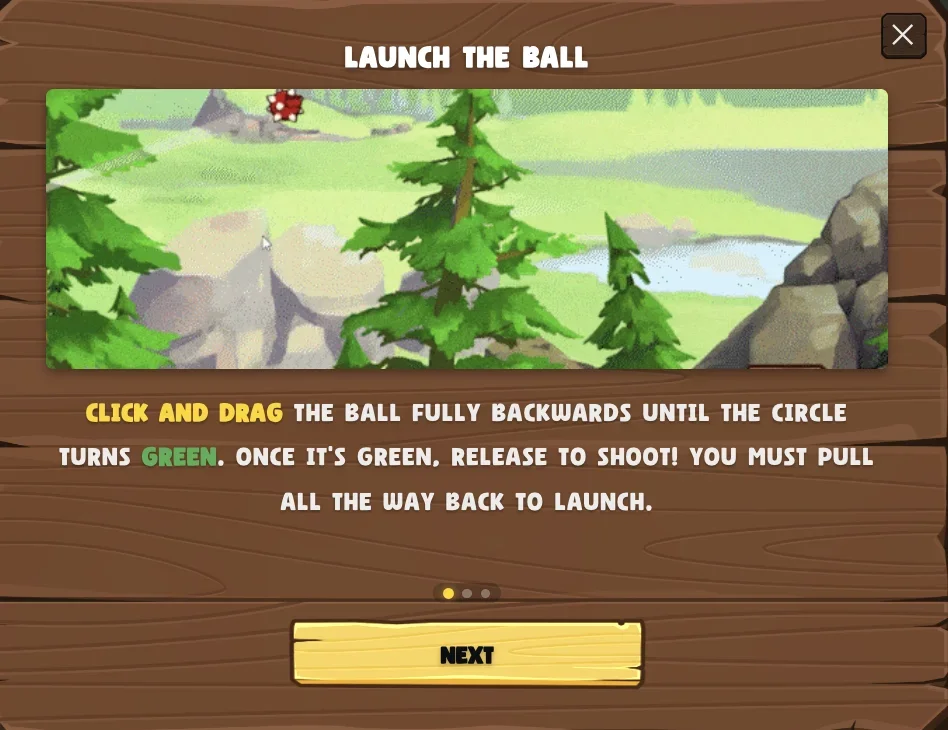
Strategy 3: Game-Specific Tactics
These tactics are specific to Angry Balls' ball launcher mechanics and can help improve your coin collection and multiplier building.
🎯 Launch Timing Mastery
Core principle: Always wait for the green circle indicator before releasing. This is the optimal timing that the game indicates.
Why it matters: Releasing too early or too late reduces your accuracy and chances of hitting coins.
Practice tip: Use demo mode to practice timing. Count in your head: "one, two, green, release" to develop muscle memory.
📊 Angle Selection Strategy
Core principle: Lower angles (1-3) have better RTP (96.48-96.51%) and hit more coins consistently.
When to use lower angles: For steady, long-term play. Better for conservative strategies.
When to use higher angles: When you want more variance and potentially higher multipliers. Higher risk, higher reward.
Tip: Check game statistics to see exact RTP by angle. Stick to angles with highest RTP for conservative play.
⚡ Powerup Collection Strategy
SPLIT: Collect early in flight to maximize the number of balls hitting coins. Especially powerful in MAX TREASURE MODE where there are many coins.
GROW: Use when coins are clustered together. The larger ball can hit multiple coins simultaneously.
GHOST: Use when you see valuable coins (GOLD or DIAMONDS) behind walls or obstacles.
Combination: SPLIT + GROW is powerful—multiple large balls can collect many coins.
💰 Coin Prioritization
Priority order:
- DIAMONDS (+10X): Highest value, but rare. Prioritize when visible.
- GOLD (+5X): High value, prioritize when visible.
- SILVER (+1X): Most common valuable coin, focus on these for steady gains.
- BRONZE (+0.25X): Smallest value, but they add up when collected in bulk.
Strategy: Don't ignore SILVER coins to chase GOLD. Steady SILVER collection builds multipliers reliably.
🎮 Game Mode Selection
STANDARD MODE (1X): Best for learning, extended sessions, conservative play. Use lower angles (1-3) for better RTP.
BOMB MODE (25X): Best for excitement and chain reactions. High variance—you might hit massive multipliers or miss everything.
MAX TREASURE MODE (100X): Best for maximum coin collection. Lower variance (more coins = more consistent hits) but highest stakes.
Tip: Start in STANDARD MODE to master mechanics before attempting higher-cost modes.
🔄 AUTO-PLAY Strategy
When to use: For extended sessions when you want to play many rounds without manually selecting angles each time.
Advantages: Reduces decision fatigue, maintains skill-based launch mechanic (still requires timing).
Disadvantages: Random angles may not be optimal. Manual angle selection (lower angles) generally yields better results.
Tip: Use AUTO-PLAY for testing different angles over many rounds, but manual play with angle selection is better for long-term results.
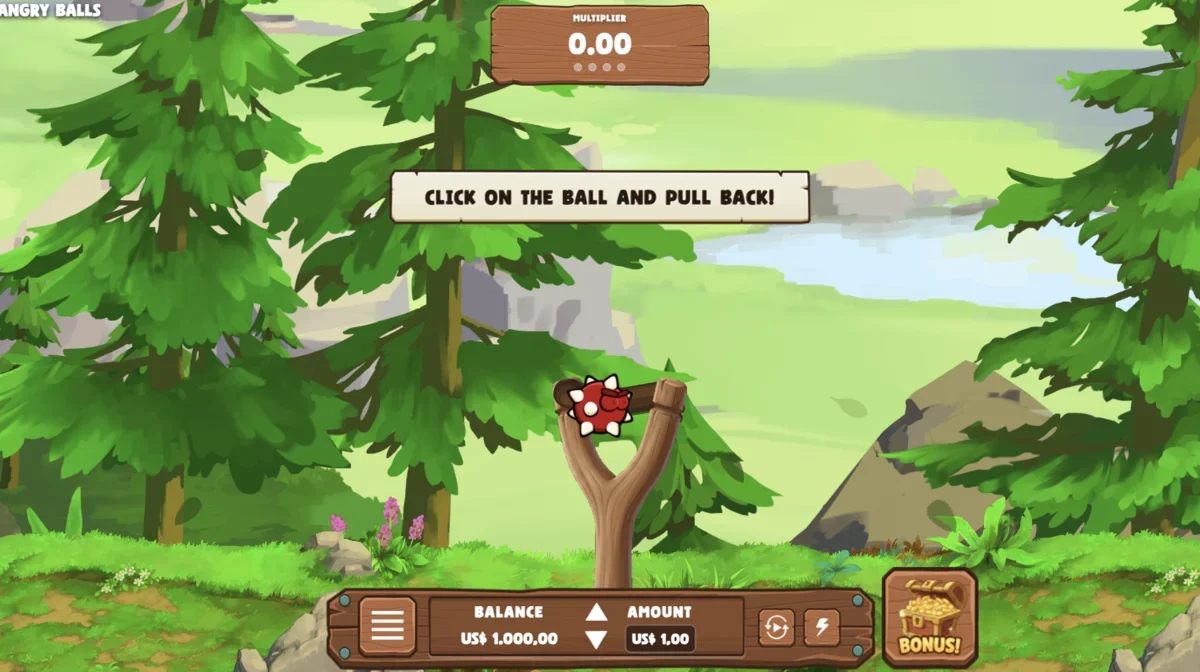
Bankroll Management: The Foundation of Success
Proper bankroll management is more important than any strategy. It's the difference between responsible gambling and financial disaster.
The 1% Rule
Never bet more than 1% of your total bankroll per round in STANDARD MODE.
Examples:
- $100 bankroll → Max $1 per round
- $500 bankroll → Max $5 per round
- $1,000 bankroll → Max $10 per round
- $2,000 bankroll → Max $20 per round
Why: This ensures you can weather variance and losing streaks without depleting your bankroll too quickly. With 1% bets, you'd need to lose 100 rounds in a row to deplete your bankroll—highly unlikely even with bad luck.
Session Limits: Time + Money
Set both time and money limits before playing:
Loss Limit
Stop immediately when you've lost a predetermined amount (e.g., 20% of bankroll).
Example: $100 bankroll → Stop at $80 (lost $20)
Time Limit
Stop when your time limit is reached, regardless of results.
Example: Set 2-hour limit → Stop at 2 hours, even if winning
Take-Profit Point
Set a profit target and consider stopping or reducing play amount when reached.
Example: $100 bankroll → Stop or reduce when up $30 (30% profit)
Stop-Loss and Take-Profit Points
| Bankroll | Stop-Loss (20%) | Take-Profit (30%) | Action at Limits |
|---|---|---|---|
| $100 | $80 (lost $20) | $130 (up $30) | Stop immediately |
| $500 | $400 (lost $100) | $650 (up $150) | Stop immediately |
| $1,000 | $800 (lost $200) | $1,300 (up $300) | Stop immediately |
Critical: These limits are non-negotiable. If you reach your stop-loss, stop immediately. Don't think "one more round"—that's how bankrolls get depleted.
Emotional Control
Emotional control is as important as bankroll management:
- Don't chase losses: If you're down, don't increase your bet to "win it back." This leads to bigger losses.
- Don't get greedy: If you're up, don't keep playing to win more. Set a take-profit point and stick to it.
- Take breaks: If you're frustrated or emotional, take a break. Don't play when emotional.
- Never play drunk or tired: Impaired judgment leads to poor decisions and bigger losses.

What Doesn't Work: Myth Busting
Many players fall for common gambling myths. Understanding why these don't work helps you avoid costly mistakes.
Myth 1: "The Game is Due for a Win"
The myth: If you've lost several rounds in a row, you're "due" for a win, so you should keep playing.
Why it's wrong: Each round is independent. Past results don't affect future outcomes. The probability of hitting coins remains the same regardless of previous rounds.
Reality: If you've lost 10 rounds in a row, the probability of winning the next round is the same as it was before—not higher. You're not "due" for anything.
What to do instead: If you've hit your loss limit, stop. Don't continue playing because you think you're "due" for a win.
Myth 2: "Betting Systems Guarantee Profit"
The myth: Systems like Martingale (doubling after losses) or Fibonacci can guarantee profit.
Why it's wrong: Betting systems don't change the house edge. The 3.5% edge still applies to every bet. Systems might help you win in the short term, but long-term, the house edge always wins.
Reality: Over 1,000 rounds, you'll still lose approximately 3.5% regardless of your betting system. Systems can't overcome mathematics.
What to do instead: Focus on skill-based tactics (aim, timing, angle selection) rather than betting systems. Skill can reduce losses, but systems cannot.
Myth 3: "Higher Bets = Better RTP"
The myth: Betting more money gives you better RTP or more chances to win.
Why it's wrong: RTP is a percentage, not an absolute amount. Whether you bet $1 or $100, the RTP remains 96.5%. Higher bets just mean you're risking more money, not getting better odds.
Reality: Betting $100 per round means you'll lose $3.50 per round on average (3.5% of $100). Betting $1 per round means you'll lose $0.035 per round on average (3.5% of $1). The percentage is the same.
What to do instead: Stick to the 1% bankroll rule. Higher bets don't improve your odds—they just increase your risk.
Myth 4: "I Can Win Back My Losses"
The myth: If you've lost money, you can win it back by continuing to play.
Why it's wrong: The house edge still applies. Continuing to play after losses just means more rounds where the house edge works against you. You're more likely to lose more than to recover losses.
Reality: If you've lost $50, continuing to play to "win it back" will likely result in losing more money due to the house edge. The best way to "win back" losses is to stop playing and not lose more.
What to do instead: Accept losses as part of gambling. Set loss limits and stick to them. Never chase losses.
Myth 5: "Skill Eliminates the House Edge"
The myth: If you're skilled enough, you can overcome the house edge and profit long-term.
Why it's wrong: Skill affects your coin collection and multiplier building, but doesn't change the underlying RTP. Even with perfect skill (hitting every coin), you'd still face the 3.5% house edge.
Reality: Skill can reduce losses and extend playtime, but cannot eliminate the mathematical advantage the casino has. The house edge is built into the game's design.
What to do instead: Use skill to improve your results, but understand that long-term profit isn't realistic. Focus on managing variance and extending playtime rather than trying to "beat" the house.
Frequently Asked Questions About Strategies
What's the best strategy for Angry Balls?
There's no single "best" strategy that guarantees profit due to the 3.5% house edge. However, conservative approaches work best for beginners: play STANDARD MODE (1X cost) with lower angles (1-3) for better RTP, focus on collecting SILVER coins consistently, and never bet more than 1-2% of your bankroll per round. Strategies are about managing variance and extending playtime, not eliminating the house advantage.
Can I beat the house edge in Angry Balls?
No. The house edge of 3.49-3.52% is mathematically built into the game's RTP (96.48-96.51%). Over the long term, the casino will always profit. Skill can help you collect more coins and reduce losses, but it cannot overcome the mathematical edge. The best you can do is manage variance, extend playtime, and minimize losses through proper bankroll management.
What's the 1% bankroll rule?
The 1% rule means never betting more than 1% of your total bankroll per round. For example, with a $1,000 bankroll, limit your play amount to $10 per round in STANDARD MODE. This ensures you can weather variance and losing streaks without depleting your bankroll too quickly. For higher-cost modes like BOMB (25X) or MAX TREASURE (100X), adjust accordingly—never risk more than 5-10% of bankroll per round in these modes.
Do betting systems like Martingale work in Angry Balls?
No. Betting systems like Martingale (doubling your bet after each loss) don't work long-term because: (1) They don't change the house edge, (2) You'll eventually hit a losing streak that exceeds your bankroll, (3) The math still favors the casino. In Angry Balls, skill-based tactics (aim, timing, angle selection) are more effective than betting systems, but even skill cannot eliminate the house advantage.
Should I use Bonus Buy in Angry Balls?
Bonus Buy (accessing BOMB MODE or MAX TREASURE MODE instantly) is only worth it if: (1) You have a substantial bankroll (cost should be 5-10% or less of total funds), (2) You're experienced with the mechanics and confident in your aim, (3) You understand that paying doesn't guarantee wins—the house edge still applies. For beginners or players with limited bankrolls, it's better to play through STANDARD MODE first to learn without risking large amounts.
How do I manage variance in Angry Balls?
High volatility means significant swings. To manage variance: (1) Use the 1% bankroll rule—never bet more than 1% per round, (2) Set strict loss limits (e.g., 20% of bankroll) and stop immediately when reached, (3) Set time limits to prevent extended losing sessions, (4) Use lower angles (1-3) in STANDARD MODE for more consistent hits, (5) Don't chase losses—if you're down, take a break or return to STANDARD MODE, (6) Accept that variance is part of the game—you'll have losing streaks and winning streaks.
What's the difference between skill and luck in Angry Balls?
Skill affects your aim, timing, and angle selection—better skill means you'll hit more coins and collect higher multipliers. However, luck still plays a role: coin placement is random, and even perfect aim can't guarantee you'll hit high-value coins every time. The house edge (3.5%) applies regardless of skill. Skill can reduce losses and extend playtime, but cannot eliminate the mathematical advantage the casino has.
Next Steps